Careless People
Did a long forgotten murder influence Fitzgerald's The Great Gatsby?

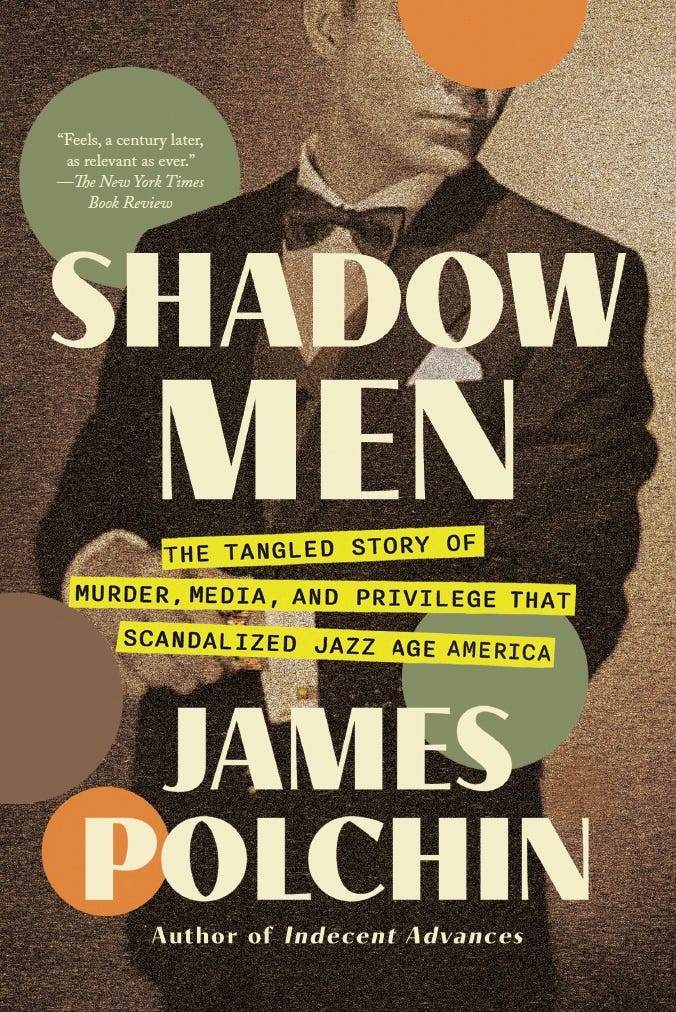
This week marks the paperback launch of my second book Shadow Men: The Tangled Story of Murder, Media, and Privilege that Scandalized Jazz Age America. The book tells the story of the mysterious murder of Clarence Peters in May of 1922. Peters was a 19-year-old, working-class, ex-sailor from Massachusetts who was found shot to death on a quiet road in upstate New York.
The mystery of the murder would consume local and national press for over a year. The crime and investigation came to symbolize the tensions of the era at the dawn of modern American culture: class conflict, political scandal, the privileges of the wealthy, and the ambitions of tabloid journalists.
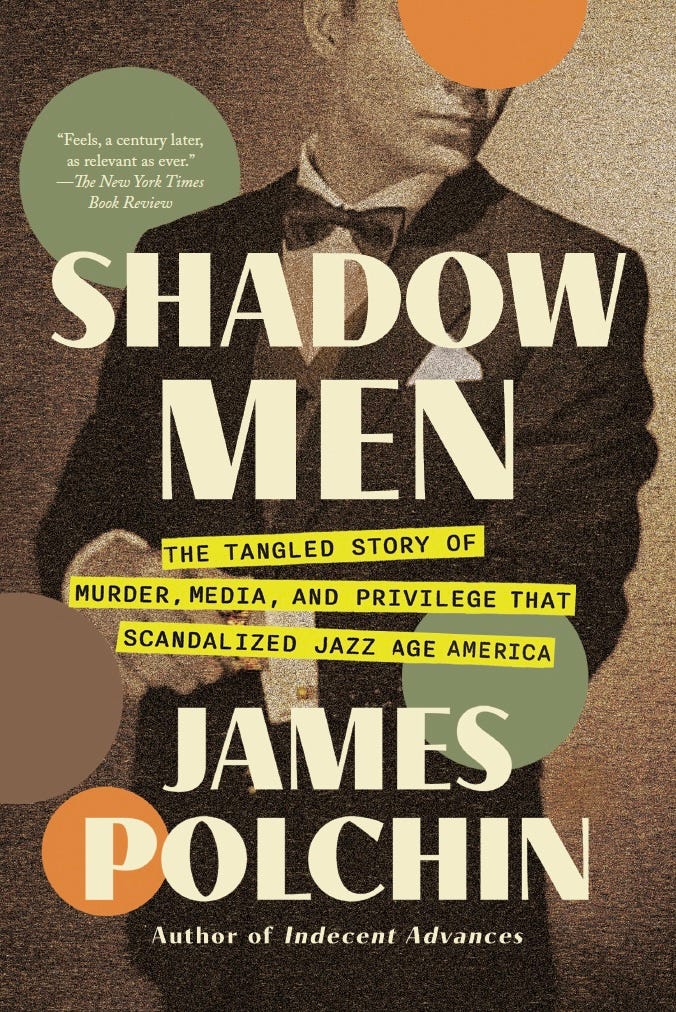
But Shadow Men is also a story of queer history as I came to discover in my research. “Unprintable practices” was how many newspapers reported the court testimony. In recounting one witness account, The New York Times daringly printed the word “faggot” on it’s front page (most other papers did not), and then told it’s readers the term referred to “sexual perverts.” (This was 1923 by the way.)
It was by far one of the most sensational crimes of the 1920s, but one that few have ever heard of.
The Summer of 1922
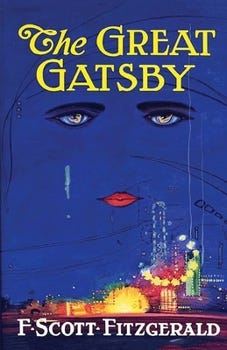
In researching and writing the book, I turned to another more well-known story set in 1922: F. Scott Fitzgerald’s The Great Gatsby. Like many, I first read the novel in high school English class. I remember discussions about the book’s symbolisms (“what does the green light mean?”). The novel was presented to our young minds as a simple one about love and deceit in a reckless era.
Years later I would read the critics and historians who argued and debated the cultural influences that may have shaped the novel as the Fitzgeralds uprooted their lives in Minnesota and moved to Great Neck, New York in 1922.
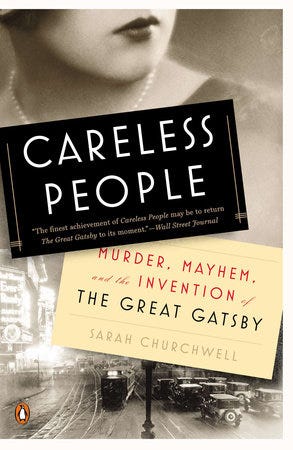
In her book Careless People: Murder, Mayhem, and the Invention of the Great Gatsby, Sarah Churchwell writes that 1922 proved a crucial year for the Fitzgeralds, calling it a “turning point” both in his writing and in their personal lives. As they moved east, F. Fitzgerald brought to Great Neck a rough idea for another novel, its shape and story still rumbling about in his head, which would eventually become The Great Gatsby.
We know that Fitzgerald was keen on the daily headlines in the press, particularly the scandal stories and crime pages. Sometimes he even commented on the news. In January of 1923, Cushman’s restaurant and dancehall in Greenwich Village was raided by the police. Known for its illicit drinking and “petting parties” among its young patrons, police arrested nearly twenty people for intoxication and disorderly conduct. Cushman himself was arrested and held on a $500 bail, charged with “impairing the morals of minors.” In court, police testified that when they raided the place, the dancing they witnessed was of “an immoral character.”
A few days later, Fitzgerald complained to the press when asked about the raid:
“Prohibition is the cause of the conditions found in such places. Half the young people who get drunk or go to shady cabarets do so simply because prohibition has made an adventure instead of a disgrace of such parties.”
The press noted that Fitzgerald had achieved fame as a “champion of the flapper both in fiction and in real life.”
A Myriad of Facts
The many critics and historians the origins of The Great Gatsby can be found in a sensational murder from September of 1922. The bodies of Edward Hall, an Episcopalian priest, and Eleanor Mills, a member of his parish choir with whom he was having an affair, were found on a grassy hillside outside Somerset, New Jersey. Both were laying on their backs, side by side, their eyes looking at the sky. Hall had a single gunshot to his head, while Mills suffered three gun shots, also to her head. Police found Hall’s calling card at his feet, and strewn around the bodies, pieces of torn up love letters between the two. Their murder became a shocking national story: an illicit affair that ended in a brutal tragedy with few clues as to the culprits.
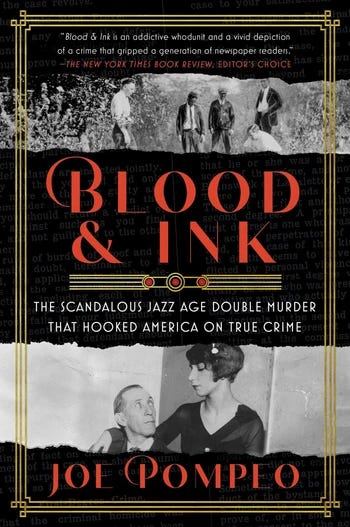
Despite years of investigation by the police and journalists, and a failed 1926 prosecution of three relatives of Hall’s wife, the case remains unsolved. “The minister and the choir singer have been dead for a hundred years,” writes Joe Pompeo in his book about the case, Blood and Ink, “but the themes of their sordid tale still resonate. It’s a story about dark secrets upending a community. About the media and the public’s interaction with scandal and crime.” The tragic murder of the minister and the choir singer has taken its place among the famous crimes of the 20th century, lingering in our consciousness precisely because it has not come to some conclusion or some sense of justice. “There is no neat and tidy ending,” writes Pompeo.
Why did one crime resonate for decades and another, equally sensational and mysterious, fade from view?
While Churchwell pursues the connections between the sensational news stories about the double-murder in New Jersey, she concedes there is no hard evidence that the Hall-Mills case was a direct inspiration in the creation of the Gatsby story. Fitzgerald’s novel is not “in any meaningful way based on a true story,” she concludes, adding “it might be better regarded as an untrue story, one that took a myriad of facts and unmade them” into what has become an iconic American story of the jazz age. Fitzgerald’s novel absorbed and reimagined the sensibilities of the times.
What struck me in my research for Shadow Men was how the Hall-Mills case had eclipsed the murder of Clarence Peter, which occurred just months before. Why did one crime resonate for decades and another, equally sensational and mysterious, fade from view? And could the Peters murder also be part of the “myriad of facts” that influenced Fitzgerald’s Gatsby?
Penniless Sailor
Peters was found along the side of a desolate road in Westchester County, New York. He had a single gunshot to his chest, and, like Hall and Mills, the young man’s body was arranged neatly on the side of the road, “about the way an undertaker would do it,” as one witness described it. Authorities knew nothing about the man as he had no identification.
It was not until his military issued underwear led the coroner to the Naval Intelligence office in Washington, D.C., that fingerprints confirmed his identity: Clarence Peters, a 19 year old resident of Haverhill, Massachusetts—a factory town along the border with New Hampshire. With only $1.32 in his pocket, Peters, who had been dishonorably discharged from the Navy, became known in the press as the “penniless sailor.” His parents were at a loss to understand how their son ended up on along a country road in New York.
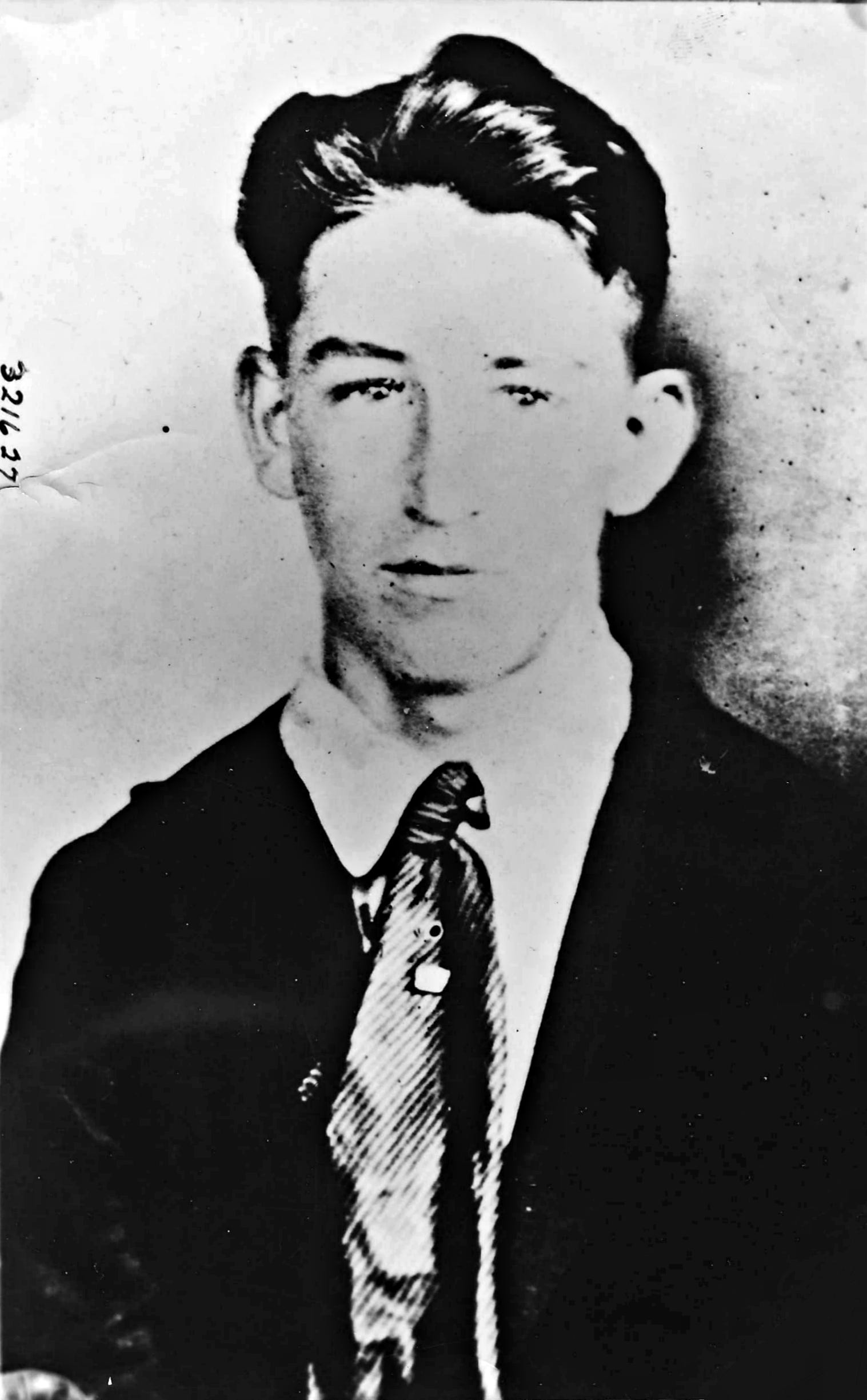
Days after Peters’ identity was made public, thirty-one year old Walter Ward came forward to confess to shooting Peters. A scion of wealthy family, whose industrialized baking empire stretched from Chicago to Boston, Ward claimed Peters was part of a blackmailing gang that had hounded him for weeks, demanding tens of thousands of dollars. The deadly encounter on the roadside in the early morning hours, Ward claimed, was in self-defense.
The problem was, there were no witnesses to the murder, and despite compelling contradictions between Ward’s version of the shooting and crime scene evidence, authorities had little to pursue to dispute Ward’s defense.
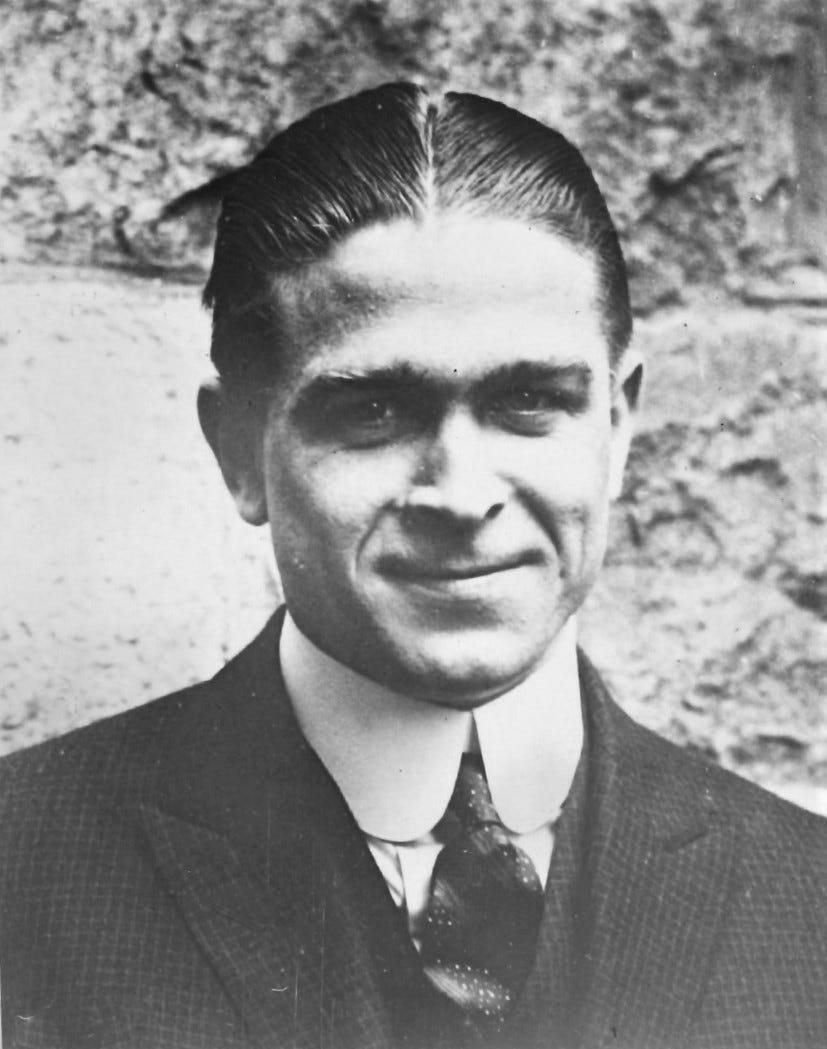
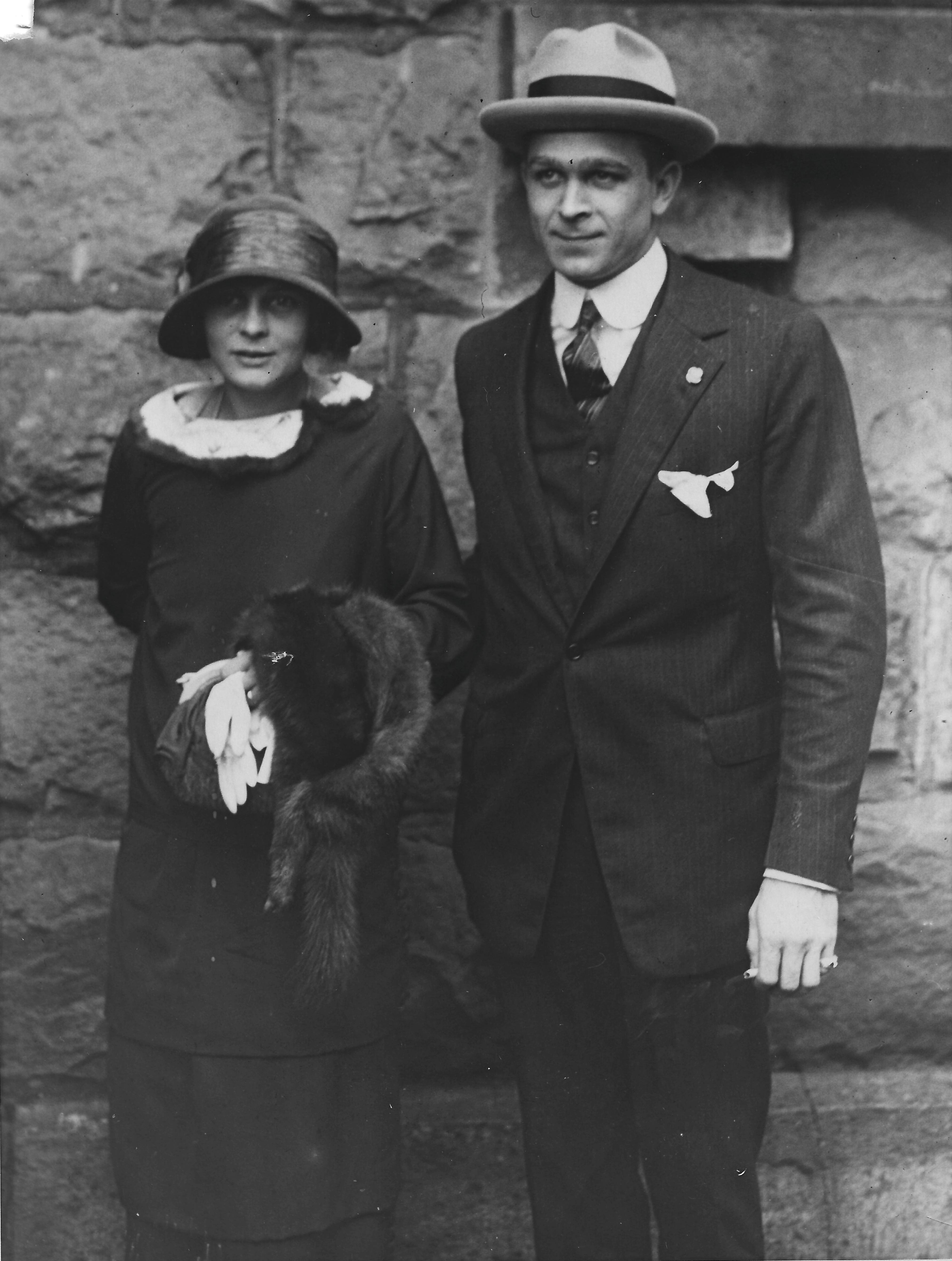
Ward was the epitome of the era: handsome and youthful in his tailored suits and silk ties. While Ward lived in the exclusive enclave of Sutton Manor in New Rochelle, New York with his charming, socialite wife Beryl and their two young children, he also indulged in race track gambling, fast cars, affairs with younger women, and a steady supply of bootlegged gin.
Detectives also heard rumors that he was a degenerate who enjoyed scandalous, all-male parties and, as one witness charged, knew all the “faggots” around the city. He lived two lives that put his character in doubt.
For sixteen months, stretching into the fall of 1923, the ongoing mystery of the blackmail, and the uncertainties about how Peters was killed, made headlines. At the heart was the mysterious secret behind the blackmail—a secret that Ward and the entire family refused to reveal.
The burgeoning New York Daily News, the first true American tabloid, did the most to criticize the lethargic investigation that had allowed Ward to use his wealth and privilege to escape accountability for the murder. “Can a Rich Man Kill a Poor Man and Not be Tried for It?” the tabloid’s editorial headline announced almost daily.
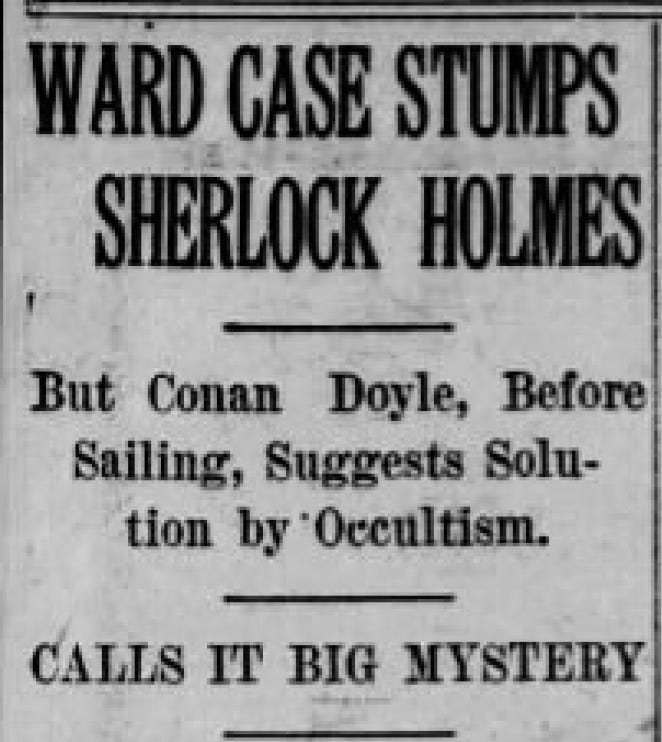
The case attracted the attention of famed detective writer Arthur Conan Doyle who was on a lecture tour in the U.S. that spring of 1922. The murder would make a “perfect Sherlock Holmes mystery” he told reporters when asked about the ongoing investigation. Conan Doyle, who was promoting his beliefs in spiritualism and mediums, what he called the “new religion,” thought a good psychic could in fact speak with Peters and uncover what happened on that road. There is no evidence that detectives ever did seek the services of a psychic.
Careless People
As I reread The Great Gatsby it was not hard to see the Ward-Peters case simmering behind the story. I could imagine how easily Walter and Beryl would have fit in at one of Gatsby’s parties at his estate in the fictional town of East Egg, Long Island. While there were of course any number of underworld bootleggers who could have inspired the character of Gatsby, the wealthy and mysterious baker’s son, with his finely tailored suits and enigmatic smile, could certainly have been a real-life figure floating in Fitzgerald’s mind, a constantly in the press, that summer and fall of 1922. When party guests gossip about Gatsby’s background in one scene in the novel, three women tell the narrator Nick Carraway, in hushed tones, “I think he killed a man.”
But rather than Gatsby himself, I started to see the specter of Walter and Beryl Ward in the figures of Tom and Daisy Buchanan, whose marriage teeters between carelessness and revulsion. Much like Walter Ward, Tom is a brutish figure, racist and sexist, with little concern for moral codes. Carraway describes Tom’s personality precisely through his physicality: “It was a body capable of enormous leverage—a cruel body.” Tom’s affair with Myrtle Wilson who lives with her husband George amidst the “valley of ashes,” a large scrap heap on the road to New York City, embodies the class tensions of the story as much as it illuminates Tom’s moral character. Daisy, Tom’s attractive socialite wife, could be a mirror to Beryl Ward, smiling for the press and devoted to her husband—at least in public.
And then I came across a contemporary review of the novel published in Collier’s magazine. The review called the book a “queer mixture of beauty and pain, courage and cruelty.” It also noted something more intriguing:
“If you had lived on western Long Island, or in Westchester County, N.Y. or just outside Chicago or San Francisco or any other sizable city, you will recognize everything in The Great Gatsby.”
The reference was clear to anyone reading the daily newspapers, and the increasingly entertaining headlines about scandals and crimes among the monied classes. But, the reviewer noted, Fitzgerald’s novel gives us something more. “The newspaper tells him what happened, but it never makes it clear enough,” he writes, “The reader wants to know why it happened. He wants to know how in thunder such a thing could happen.”
That, of course, is what art can offer—a certain truth that is often elusive in real life. In their best effort, historical true crime stories can come as close as possible to the “why?” of a crime. But, as Pompeo notes, there is often no “neat and tidy” endings.
Gatsby ends up dead, floating in his pool he never used in life. His murder was a case of mistaken identity by George Wilson who shot Gatsby and himself, wrongly believing the millionaire had run down and killed his wife Myrtle with his automobile. It was instead Daisy who drunkenly and carelessly hit Myrtle. But Daisy and Tom leave the novel with little consequence for their actions, and little justice for Myrtle, left there on the side of the road for someone else to deal with, much like Clarence Peters.
Fitzgerald’s novel lacks a moral center, which is of course the point. “They were careless people, Tom and Daisy” Fitzgerald writes near the end of the novel, “they smashed up things and creatures and then retreated back into their money or their vast carelessness, or whatever it was that kept them together, and let other people clean up the mess they had made.”
The same could be the said of Walter and Beryl Ward.
I can’t say that the Ward-Peters headlines influenced Fitzgerald as he composed The Great Gatsby. But as a writer and researcher of historical true crime interested in following clues through dusty archives and newspaper databases and microfilm, it was hard not to see the Peters-Ward case simmering behind the world of East Egg, and the tragedies of the novel’s end. This long-forgotten case was, perhaps, sitting there in that American classic all along.
Listen to me discuss the Ward-Peters case on the following podcasts:
Wicked Words: A True Crime Podcast with Katie Winkler Dawson
Most Notorious! A True Crime History Podcast
Buy Shadow Men at bookshop.org or your local bookstore